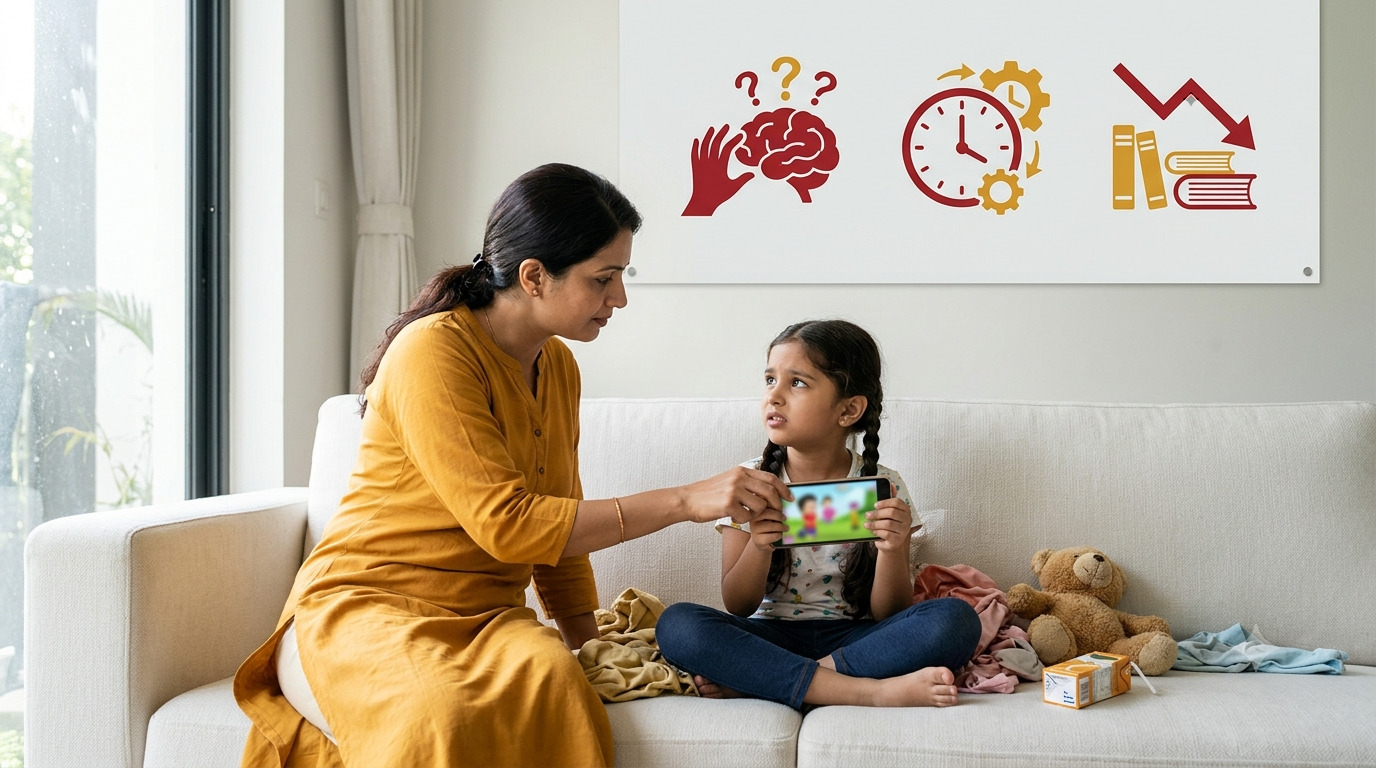



Sleep and Academic Performance: Why Bedtime Matters for Students
If your child is rubbing their eyes over breakfast, forgetting homework, or losing marks despite hours of studying, the problem might not be their textbooks at all. A growing body of research links sleep and academic performance directly — the less a child sleeps, the harder it becomes for them to focus, remember, and perform in school. As a parent, understanding this connection is one of the simplest ways to help your child do better, without adding a single extra hour of tuition.
In this post, we’ll break down exactly how sleep affects learning, how much rest your child actually needs, and what a realistic bedtime routine looks like for Indian households juggling homework, screens, and early school buses.
The Real Link Between Sleep and Academic Performance
During sleep, the brain doesn’t just rest — it actively processes the day’s lessons. This is when short-term memories from class get converted into long-term knowledge, a process scientists call memory consolidation.
Cut that sleep short, and the brain simply doesn’t get enough time to file away what was learned. That’s why a child who studied hard the night before an exam but slept only four hours often blanks out on answers they clearly knew.
Beyond memory, sleep affects:
- Attention span — tired brains struggle to stay focused in class
- Problem-solving ability — especially in subjects like maths and science
- Emotional regulation — sleep-deprived kids get irritable, anxious, or demotivated faster
- Reaction time and accuracy — relevant for exams with strict time limits
According to the National Sleep Foundation on sleep and cognitive function, insufficient sleep is consistently associated with lower grades and reduced classroom engagement across age groups.

How Much Sleep Do Students Need?
One of the most common questions parents ask is simply: how much sleep is enough? The answer depends on age, but the ranges are fairly consistent across pediatric guidelines.
- Ages 6–12: 9–12 hours per night
- Ages 13–16: 8–10 hours per night
- Teenagers preparing for board exams: Still need at least 7–8 hours, even during exam season
The CDC guidelines on sleep by age group confirm these ranges and note that consistently falling short — even by an hour a night — accumulates into a “sleep debt” that affects concentration over time.
It’s a common myth that older students need less sleep because they have more work. In reality, teenagers’ brains are still developing, and this age group is particularly vulnerable to the effects of poor sleep on mood and academic focus.
Effects of Sleep Deprivation on Students
Sleep deprivation rarely shows up as an obvious “problem” — it disguises itself as laziness, poor discipline, or lack of interest in studies. This often leads parents down the wrong path, adding pressure instead of addressing the root cause.
Common signs of sleep deprivation include:
- Difficulty waking up for school despite an early bedtime attempt
- Falling asleep during study sessions or in class
- Increased irritability or mood swings
- Declining grades despite consistent study effort
- Frequent complaints of headaches or fatigue
Over time, chronic sleep deprivation has been linked to weaker immunity, slower physical growth, and higher risk of anxiety in school-age children. It’s not just an academic issue — it’s a health one too.
If you’ve noticed your child struggling with focus, it may be worth reading our [INTERNAL LINK: guide on signs of screen addiction in children] to check whether late-night device use is a hidden contributor.

Building a Bedtime Routine for Students
The good news is that fixing sleep doesn’t require dramatic changes — just consistency. A predictable bedtime routine for students signals to the brain that it’s time to wind down, making it easier to fall asleep and stay asleep.
Step 1: Set a Fixed Sleep Schedule for School
Choose a bedtime that allows for the full recommended sleep duration, and stick to it — including on weekends. An inconsistent sleep schedule for school confuses the body’s internal clock, making Monday mornings even harder.
Step 2: Create a Screen Cut-Off Time
Blue light from phones and tablets delays the release of melatonin, the hormone that makes us feel sleepy. Encourage screens to switch off at least 45–60 minutes before bedtime.
Step 3: Rework the Homework Timeline
Late-night cramming is one of the biggest disruptors of student sleep. Encourage your child to start homework earlier in the evening rather than pushing it to just before bed.
[INTERNAL LINK: article on how to build an effective daily study timetable]
Step 4: Make the Bedroom Sleep-Friendly
Dim lighting, a cool room temperature, and minimal noise all support better sleep quality. Keeping phones outside the bedroom overnight also reduces the temptation to check messages.
Step 5: Avoid Heavy Meals and Caffeine Late in the Day
Many Indian households serve dinner late; try to keep it at least 2 hours before bedtime. Caffeinated drinks, including some sodas and energy drinks, should be avoided after early afternoon.
Benefits of Good Sleep for Studying
Once a consistent routine is in place, the benefits of good sleep for studying tend to show up faster than parents expect — often within one to two weeks.
- Better concentration during lectures and self-study
- Improved memory recall during tests and exams
- More stable moods, reducing conflict around homework time
- Higher energy levels for extracurriculars and physical activity
- Reduced exam anxiety, since well-rested brains handle stress better
It’s worth noting that sleep doesn’t replace effective study habits — it enhances them. A well-rested student who studies for one focused hour often retains more than an exhausted student who “studies” for three.
What About Exam Season?
Many parents assume sleep should be the first thing sacrificed during board exams or important tests. In practice, this often backfires — tired students take longer to grasp concepts and make more careless errors.
Instead of cutting sleep, consider:
- Starting exam revision earlier so late-night cramming isn’t necessary
- Breaking study sessions into shorter, focused blocks with breaks
- Allowing short power naps (20–30 minutes) if daytime tiredness hits
[INTERNAL LINK: guide on managing exam stress for school students]
Final Thoughts: Small Changes, Real Results
The connection between sleep and academic performance isn’t just a theory — it’s something you can observe in your own child’s mood, focus, and grades within a few weeks of adjusting their schedule. A consistent bedtime, limited late-night screen use, and a calmer evening routine can do more for academic performance than an extra hour of tuition ever could.
Start small: pick one change from this list — maybe an earlier lights-out time or a screen curfew — and try it consistently for two weeks. Track how your child feels and performs, and adjust from there.
Ready to help your child sleep better and study smarter? Share this checklist with your family and start with just one change tonight.