

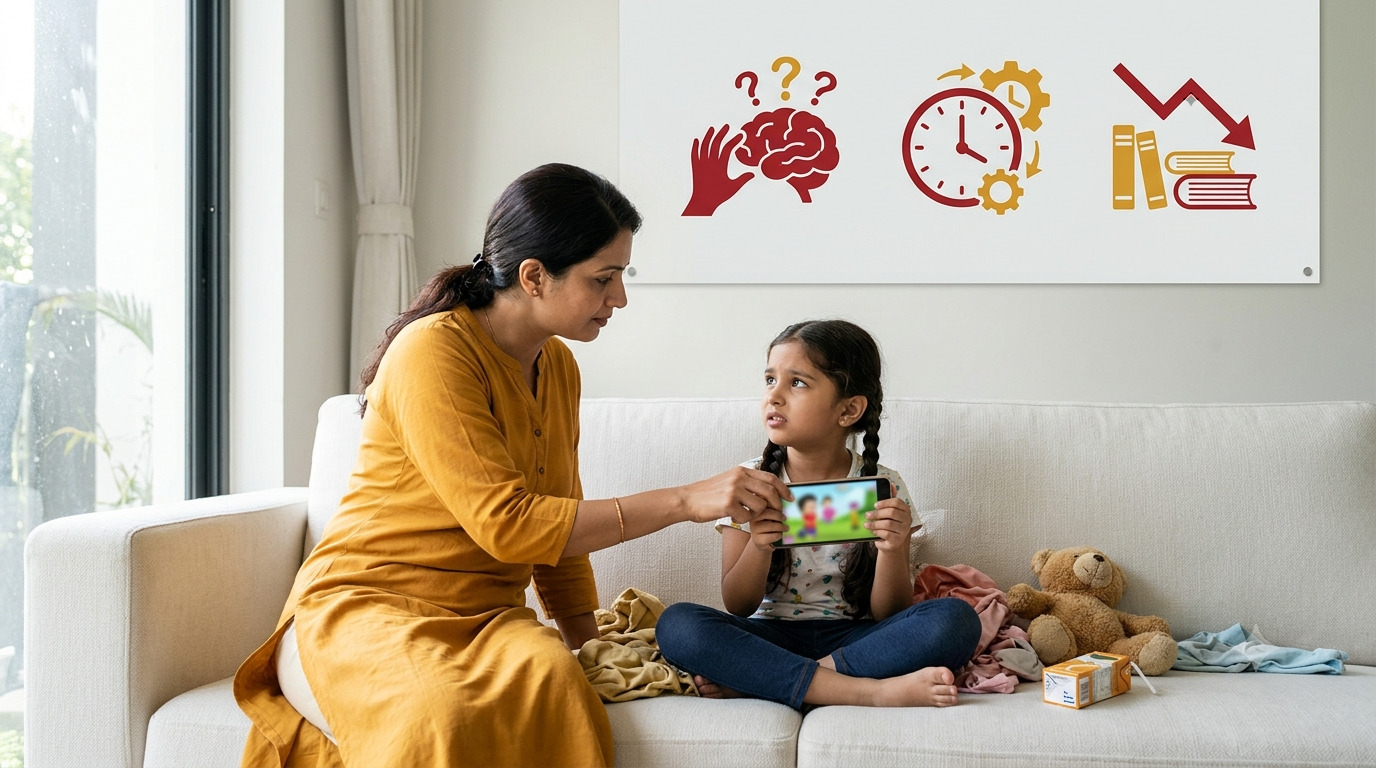

10 Warning Signs of Screen Addiction in Children Every Indian Parent Should Know
If you’ve ever caught yourself wondering whether your child’s tablet time has quietly turned into something more, you’re not alone. Recognising the early signs of screen addiction in children is one of the most common worries Indian parents bring up today, and it’s rarely about being “too strict” or “too lax” — it’s about knowing where the line actually is.
The good news? You don’t need a psychology degree to spot it. You just need a clear checklist and the confidence to trust what you’re already noticing.
Why This Matters More for Indian Families Right Now
Between online classes, YouTube “breaks,” and cousins comparing gaming ranks over WhatsApp, screen time effects on children have become harder to track than they were even five years ago. Many parents in our school community have shared the same story: what started as 20 minutes of cartoons slowly grew into hours, and nobody quite noticed the shift happening.
This isn’t about panic. It’s about awareness — so you can act early, calmly, and effectively.
What Counts as “Addiction” vs. Normal Screen Use?
Before the checklist, it helps to separate two very different things. Enjoying a show or game is normal. A problem shows up when screen use starts replacing — not just supplementing — sleep, friendships, schoolwork, or basic daily routines.
This is a helpful and reasonable question, and it’s exactly what the next section addresses.
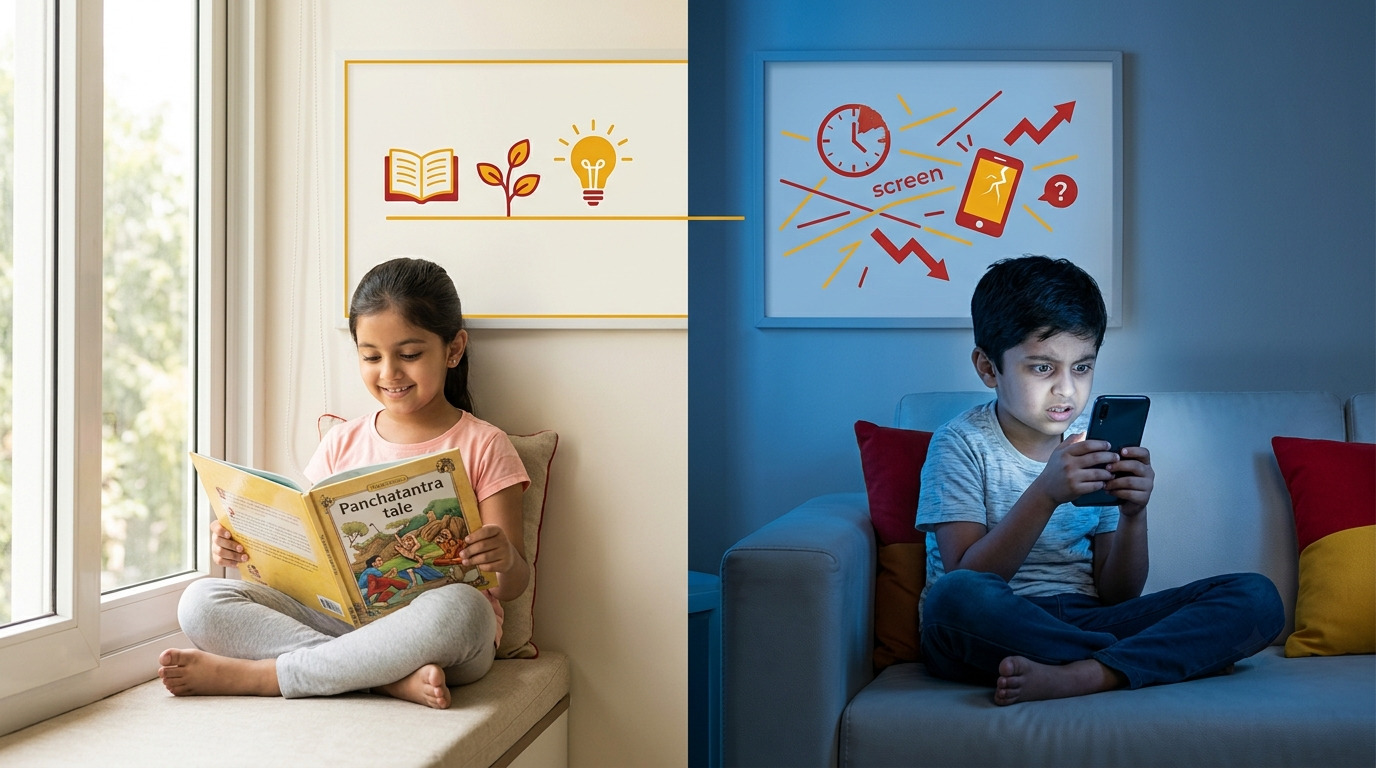
How Much Screen Time Is Healthy for Kids?
Parents often ask how much screen time is healthy for kids before they even get to the warning signs, and that’s a fair starting point. The American Academy of Pediatrics broadly recommends limiting entertainment screen time and prioritising sleep, physical activity, and offline interaction for school-age children American Academy of Pediatrics — Media and Children guidance.
But numbers alone don’t tell the full story. A child watching 45 minutes of a nature documentary is in a very different place than a child who spends the same 45 minutes anxiously refreshing a game leaderboard. Duration matters, but behaviour around the screen matters more — which brings us to the signs themselves.
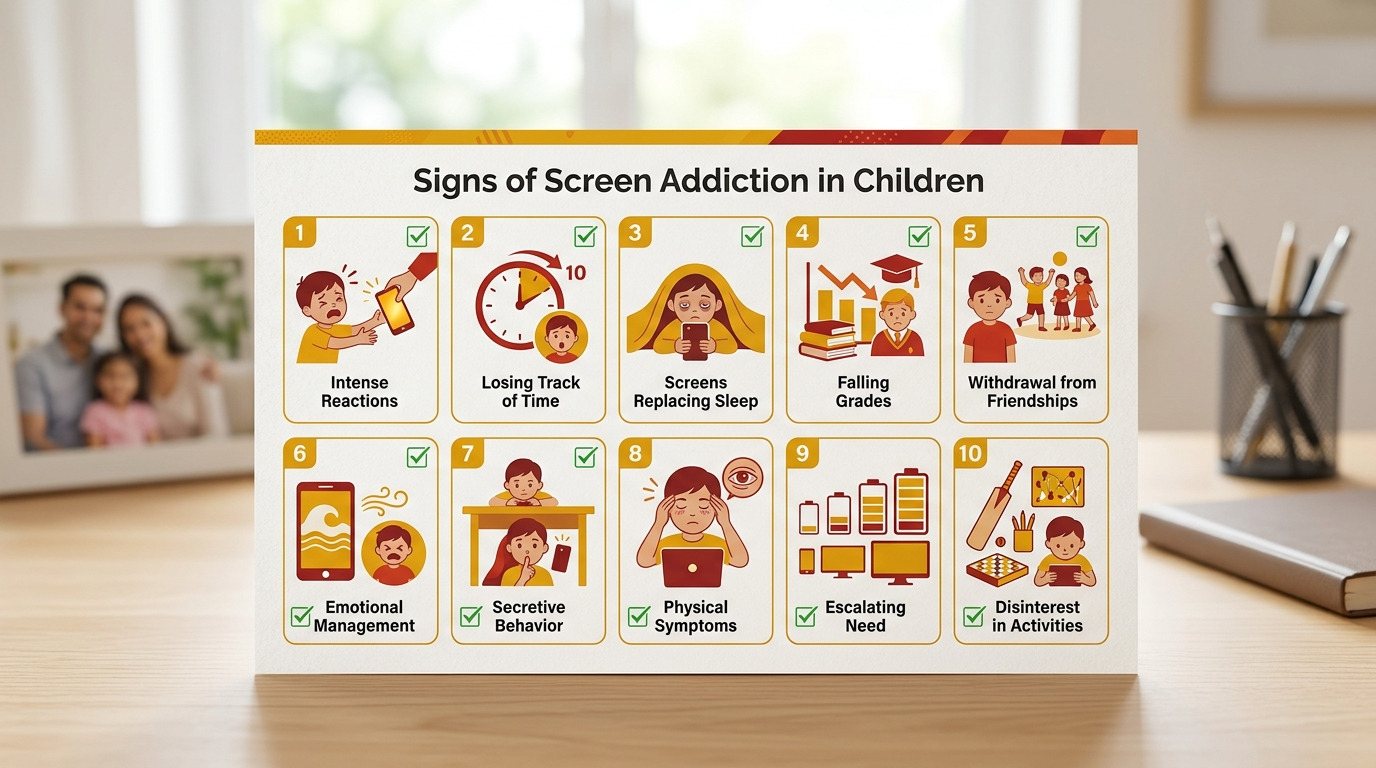
10 Signs of Screen Addiction in Children
Here are the ten behavioural markers that paediatricians, counsellors, and experienced teachers most commonly flag. You don’t need to see all ten — even two or three showing up consistently is worth paying attention to.
1. Intense Reactions When the Screen Is Taken Away
Ordinary disappointment looks like a sigh or a short sulk. A red flag looks like shouting, crying, or bargaining that feels disproportionate to “just” losing screen time.
2. Losing Track of Time Repeatedly
If your child genuinely seems surprised that “10 more minutes” turned into an hour, more than once a week, this is one of the clearer screen addiction symptoms in kids.
3. Screens Replacing Sleep
Late-night phone use under the blanket, or difficulty falling asleep without a device nearby, is one of the most physically telling signs — and one of the easiest for parents to verify.
4. Falling Grades or Incomplete Homework
When schoolwork consistently takes a back seat to gaming or scrolling, and the child themselves seems unable to prioritise it despite wanting to do well, that’s not laziness — it’s a pattern worth addressing directly.
5. Withdrawal from Real-Life Friendships
Watch for a child who used to enjoy playing outside or meeting friends, but now consistently chooses the screen over social invitations.
6. Using Screens to Manage Emotions
If a device is the only thing that calms a tantrum, boredom, or sadness, the screen has moved from entertainment to emotional crutch — an important distinction.
7. Secretive or Deceptive Behaviour Around Devices
Hiding phone use, lying about how long they’ve been online, or using devices only when parents aren’t around are strong indicators that the child already senses the use is excessive.
8. Physical Symptoms
Headaches, eye strain, poor posture complaints, or reduced appetite tied closely to screen sessions shouldn’t be dismissed as unrelated coincidences.
9. Escalating Need for More Screen Time
Similar to any dependency pattern, if 30 minutes stopped feeling “enough” months ago and now it’s two hours, the tolerance is climbing — a hallmark of mobile phone addiction in children.
10. Disinterest in Previously Loved Offline Activities
A child who once loved cricket, drawing, or board games but has quietly dropped all of it in favour of a screen is showing one of the more overlooked warning signs.
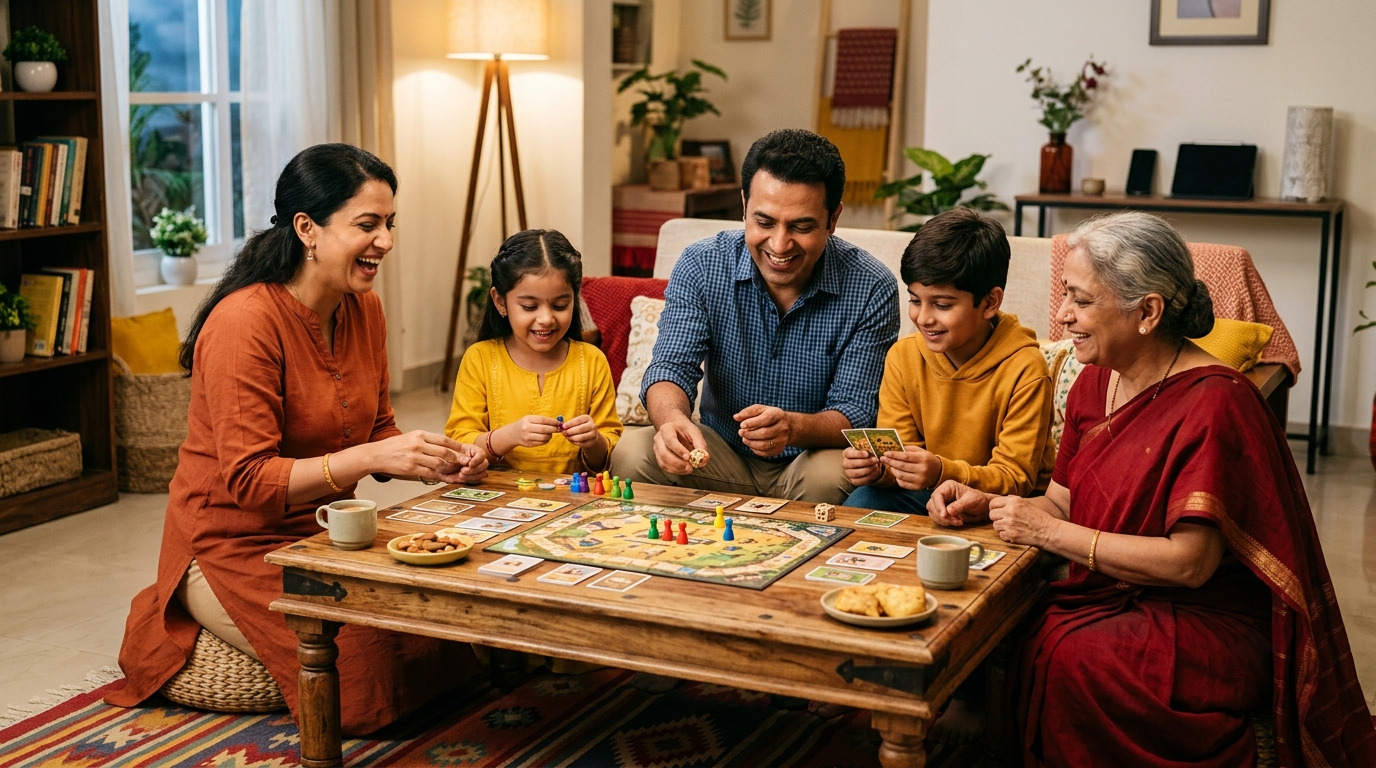
What to Do Once You’ve Spotted the Signs
Noticing a pattern is the hard part — the response can actually be simple and non-confrontational. Here’s a starting framework:
- Name it calmly. Tell your child what you’ve noticed, without blame: “I’ve seen you get really upset when we stop screen time — let’s figure out why together.”
- Set predictable boundaries, not sudden bans. Sudden restriction often backfires and increases secretive behaviour.
- Replace, don’t just remove. Fill the freed-up time with something engaging — sport, a hobby, family time — rather than leaving a void.
- Loop in the school. Teachers often notice attention and social patterns parents don’t see during the day. [INTERNAL LINK: How to talk to your child’s teacher about behavioural concerns]
- Model the behaviour you want. Children mirror parental screen habits more than most parents realise.
If you’re specifically looking for tactics, our companion piece on how to reduce screen time for children India-wide walks through week-by-week, practical steps. [INTERNAL LINK: A parent’s step-by-step guide to reducing screen time at home]
[IMAGE 4: Family enjoying a screen-free board game evening together] Alt text: family reducing screen time for children India style with an offline evening activity Suggested filename: signs-of-screen-addiction-in-children-4.jpg
When to Seek Additional Support
If several signs persist for more than a few weeks despite consistent boundary-setting, it may help to speak with a paediatrician or child counsellor. Early intervention is far easier — and far less stressful for everyone — than addressing an entrenched habit later. The World Health Organization also offers general guidance on healthy digital habits for families that many parents find reassuring. WHO — guidance on children’s health and digital media use
For a deeper look at long-term impact, you may also want to read our related article on [INTERNAL LINK: understanding the long-term screen time effects on children’s development].
A Reassuring Final Word
Spotting these signs doesn’t mean you’ve failed as a parent, and it doesn’t mean your child is beyond help — quite the opposite. Most children respond well once boundaries are set with warmth rather than punishment.
Start small: pick just one or two signs from this list that felt familiar, and address those first. If you’d like personalised guidance, reach out to your child’s school counsellor or class teacher — they’re often your most practical first step, and they’re already on your side.